Natural Resources: 8 Types, Examples & 10 Ways to Protect Them
Take a look around you.
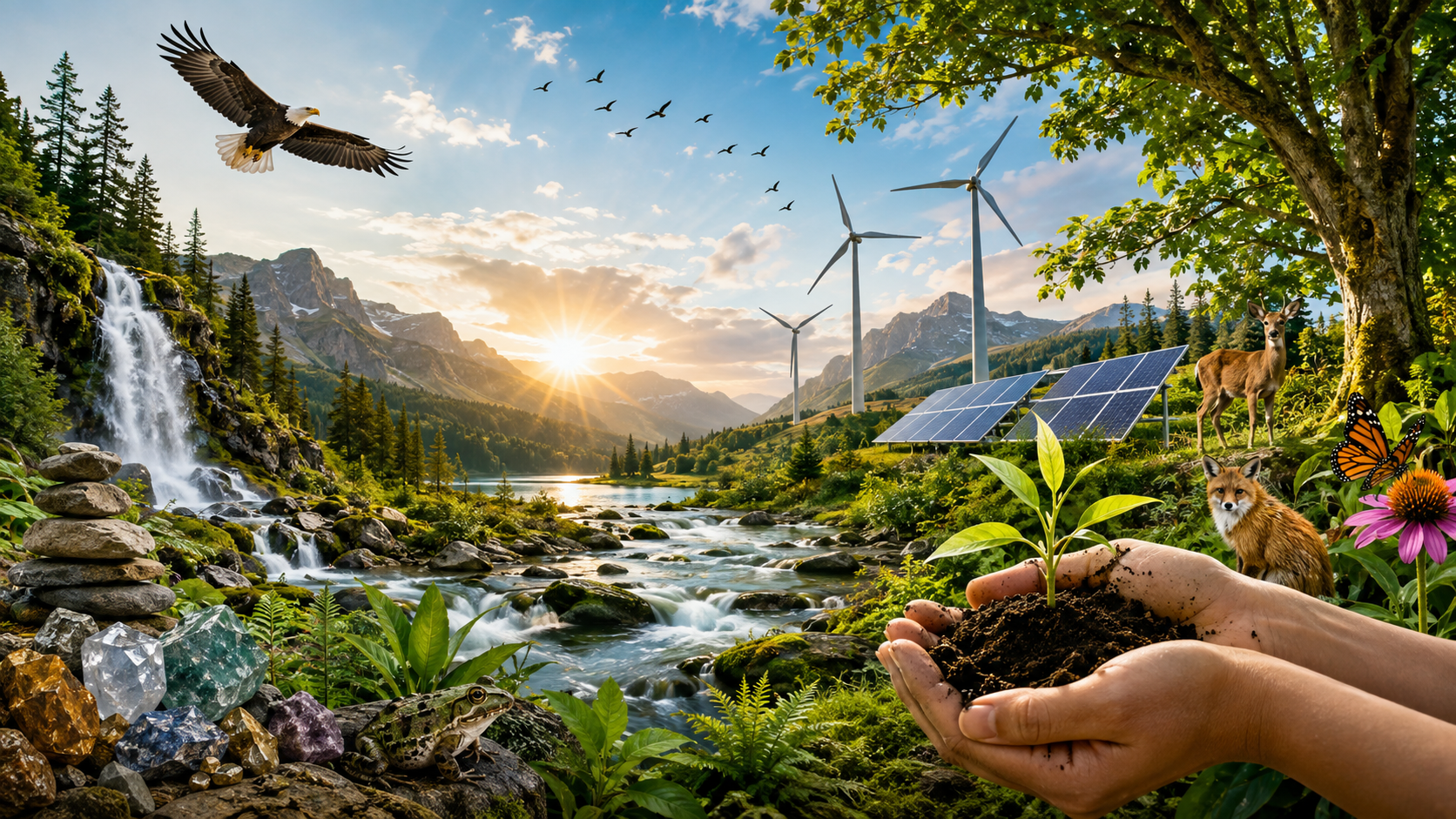
The water in your glass. The wood in your furniture. The food in your kitchen. The cotton in your clothes. The sunlight coming through your window.
Even the air you just breathed.
Nature provided the starting point for all of it.
Natural resources are so woven into our everyday lives that it’s easy to forget just how much we depend on them. But once you start noticing them, you begin to see them everywhere.
And that’s exactly why they’re worth understanding — and protecting.
The good news?
You don’t need to be a scientist, environmentalist or conservation expert to make a difference.
Let’s start with the basics.
What Are Natural Resources?
Natural resources are materials, substances, energy sources and living components of nature that support life and human societies.
Some are obvious — like water, forests and wildlife.
Others are easier to overlook — like sunlight, soil, rocks and the minerals used to make everything from buildings to cell phones.
Before exploring the different types, it helps to understand one important distinction.
Renewable vs. Non-Renewable Natural Resources
Natural resources are often divided into two broad categories: renewable and non-renewable.
Renewable Resources
Renewable resources are naturally replenished through Earth’s biological or physical processes.
Examples can include:
- Sunlight
- Wind
- Flowing water
- Plants and forests
- Some biological resources
But here’s something important:
Renewable does not mean unlimited.
A forest can grow back — but not if trees disappear faster than the ecosystem can recover.
Groundwater may recharge — but some underground supplies can be withdrawn much faster than nature replaces them.
Wildlife populations may reproduce — but habitat loss, pollution, overfishing or overhunting can overwhelm their ability to recover.
How we use renewable resources still matters.
Non-Renewable Resources
Non-renewable resources exist in finite supplies or form so slowly that they cannot realistically be replaced within a human lifetime.
Examples include:
- Coal
- Oil
- Natural gas
- Many minerals
- Metals
- Rock and stone resources
That doesn’t mean humanity can never use them.
It means how thoughtfully we use them matters.
8 Types of Natural Resources All Around Us
Natural resources aren’t tucked away somewhere in the wilderness.
They’re beneath our feet, above our heads, inside our homes and supporting nearly everything alive around us.
Here are eight important examples.
1. Air
You can’t see it.
But you can’t live without it.
Earth’s atmosphere contains the gases that make life possible, primarily nitrogen and oxygen along with carbon dioxide and other gases.
People and animals depend on oxygen for respiration, while plants interact with atmospheric gases through processes such as photosynthesis.
Resource Type: Naturally Replenished
Rather than fitting perfectly into a traditional renewable/non-renewable category, Earth’s atmosphere is continuously influenced and replenished through natural cycles.
What matters enormously is air quality.
Pollution from vehicles, industry, fires and other sources can affect human health, plants, wildlife, water and entire ecosystems.
How can we help protect it?
Reducing unnecessary energy use, supporting cleaner transportation and energy technologies, preventing harmful pollution and protecting vegetation can all contribute to healthier air.
2. Sunlight
Sunlight does much more than brighten our days.
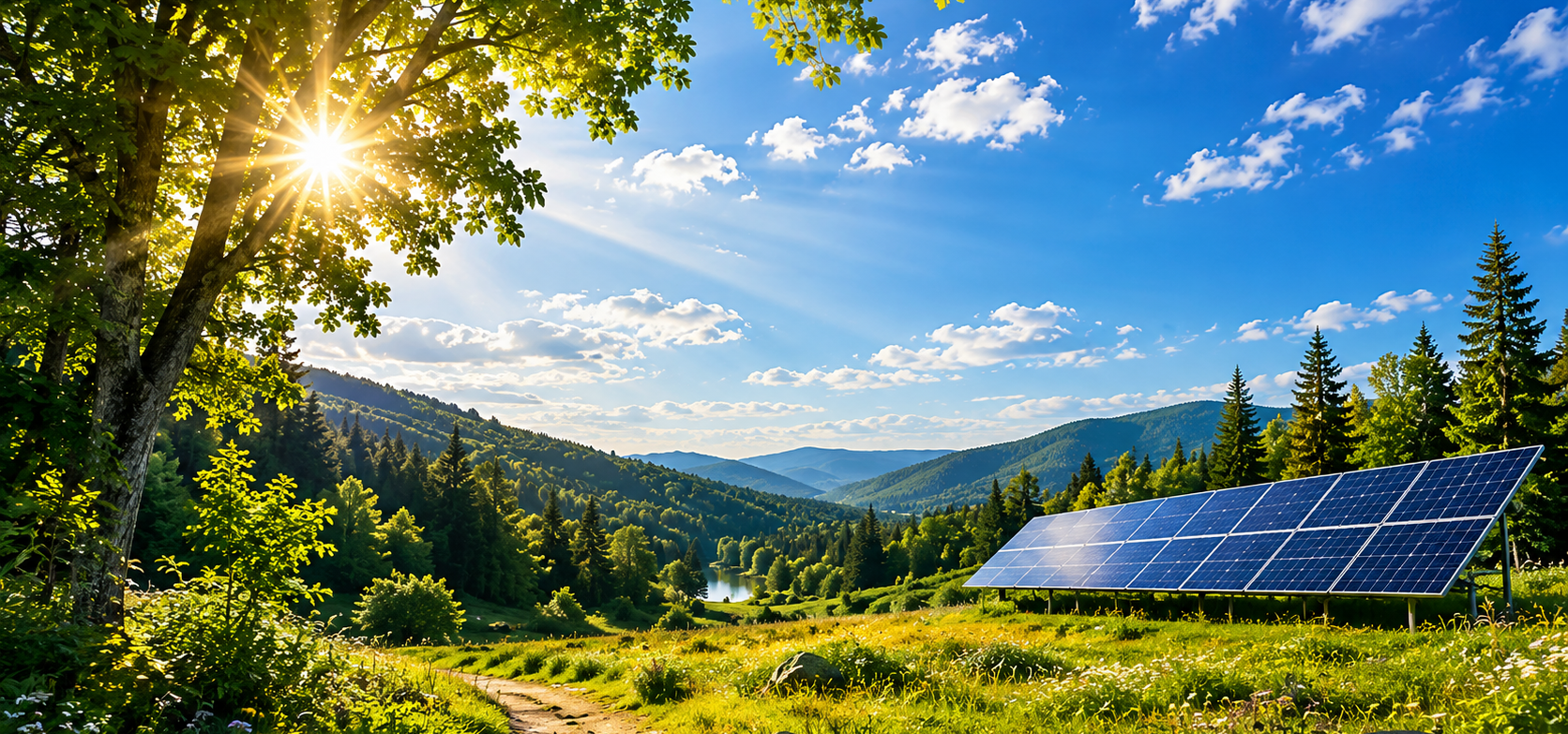
It supplies energy that plants use during photosynthesis, influences Earth’s climate and weather systems and can be captured by solar technologies to generate electricity.
Resource Type: Renewable
Sunlight is considered a renewable energy resource because it is continuously supplied by the sun on human timescales.
Unlike fossil fuels, using sunlight today doesn’t mean there will be less available tomorrow.
And increasingly, humans are learning how to harness more of that energy without burning finite fuels.
3. Water
Every known living thing depends on water.
Freshwater supports:
- Drinking supplies
- Agriculture
- Sanitation
- Industry
- Plants
- Wildlife
- Aquatic ecosystems
Oceans are equally important, supporting extraordinary biodiversity while influencing weather and Earth’s climate.
Water continually moves through Earth’s water cycle — evaporating, condensing, falling as precipitation and moving through rivers, lakes, soil and groundwater.
Resource Type: Renewable — With Important Limitations
Water is generally considered renewable because of this continuous cycle.
But that doesn’t mean usable clean freshwater is unlimited.
Groundwater can be pumped faster than some aquifers recharge. Rivers and lakes can experience shortages. Pollution can also make existing water supplies unsafe or much more difficult and expensive to use.
Protecting water means thinking about both quantity and quality.
How can we help?
Use water thoughtfully, repair leaks, reduce unnecessary runoff and pollution, dispose of chemicals properly and support efforts that protect wetlands, waterways and groundwater.
4. Soil
That dirt beneath your feet is far more remarkable than it looks.
Healthy soil is a living system containing minerals, organic matter, water, air and countless organisms.
It supports plant growth, agriculture, forests and enormous portions of Earth’s food web.
Soil also plays important roles in:
- Cycling nutrients
- Storing and filtering water
- Supporting biodiversity
- Providing habitat
- Growing food
And here’s something we often forget:
Healthy soil can take a very long time to form.
Resource Type: Slowly Renewable — But Easily Degraded
Soil formation is an ongoing natural process, but erosion and degradation can occur much faster than healthy soil can rebuild.
Poor land management, erosion, contamination, loss of vegetation and other disturbances can significantly damage soil.
How can we help?
Protect vegetation, reduce unnecessary chemical use, compost where appropriate, prevent erosion and support agricultural and landscaping practices that improve soil health.

5. Rocks, Minerals & Metals
Look at a building, road, car, computer or cell phone and you’re looking at products that began partly with Earth’s geological resources.
Rocks, minerals and metals provide raw materials for:
- Buildings
- Roads
- Electronics
- Vehicles
- Batteries
- Medical equipment
- Manufacturing
- Household products
Many of these materials formed through geological processes spanning enormous periods of time.
Resource Type: Generally Non-Renewable
Once extracted, geological resources cannot simply regenerate within a meaningful human timeframe.
That’s why responsible extraction matters — but so do reuse and recycling.
Some metals and other materials can be recovered from existing products and used again, reducing the need for additional extraction.
Before something becomes “waste,” it’s worth asking whether its materials still have value.

6. Plants & Forests
Plants quietly perform some of the most important work on Earth.
They provide:
- Food
- Oxygen
- Medicines
- Fibers
- Building materials
- Wildlife habitat
- Shade and cooling
- Soil protection
Forests also store carbon, influence water cycles and support extraordinary biodiversity.
Resource Type: Renewable — When Managed Sustainably
Plants can reproduce and regrow.
But only if we give them the opportunity.
Deforestation, habitat destruction, invasive species, pollution and unsustainable harvesting can overwhelm an ecosystem’s natural ability to recover.
Protecting forests isn’t simply about saving trees.
It’s about protecting the entire community of life that depends on them.
How can we help?
Plant native species, protect existing trees and habitat, reduce unnecessary paper and wood consumption, reuse materials and support responsible forestry.
7. Animals & Wildlife
Animals are not simply resources for human use.
They are living participants in Earth’s ecosystems.
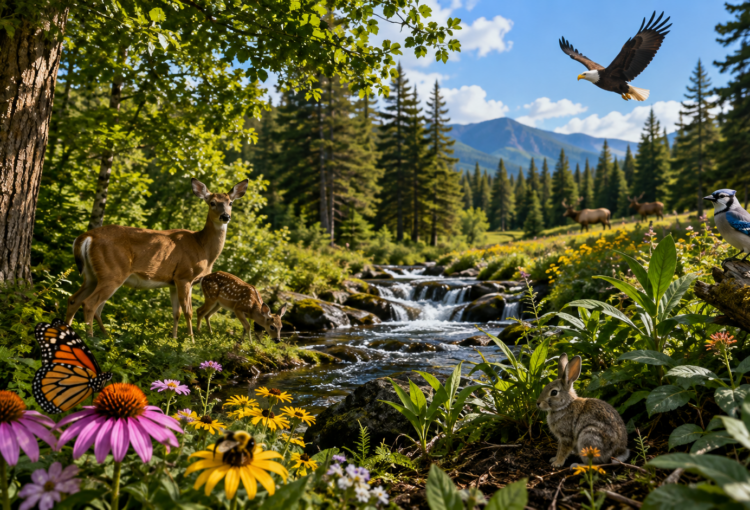
Pollinators help plants reproduce.
Birds and other animals disperse seeds.
Predators help regulate populations.
Marine animals contribute to complex ocean ecosystems.
Tiny organisms we rarely notice can play enormous ecological roles.
Humans also have longstanding relationships with animals through companionship, agriculture, food systems, research and other activities.
But the ability of animals to reproduce does not make wildlife unlimited.
Habitat destruction, pollution, climate pressures, poaching, overfishing and unsustainable exploitation can cause populations to decline — sometimes beyond their ability to recover.
Resource Type: Biologically Renewable — When Populations and Habitats Remain Healthy
The better question isn’t simply whether animals are “renewable.” It’s whether we’re protecting the conditions they need to continue existing and thriving.
8. Fossil Fuels
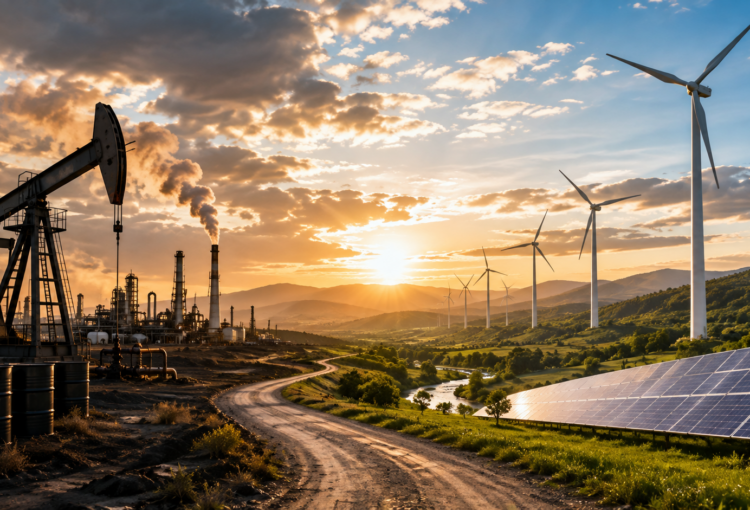
Coal, petroleum and natural gas formed from ancient organic material transformed by geological processes over millions of years.
Today, fossil fuels remain deeply connected to:
- Transportation
- Electricity generation
- Heating
- Manufacturing
- Industrial processes
- Petrochemical products
But fossil fuels come with two major limitations.
Their supplies are finite, and burning them releases carbon dioxide and other pollutants.
Resource Type: Non-Renewable
Fossil fuels form far too slowly to replace what humanity consumes on human timescales.
That’s one reason renewable energy technologies, energy efficiency and cleaner alternatives have become such important parts of long-term resource conservation.
Why Does Protecting Natural Resources Matter?
Because protecting natural resources isn’t really about saving a list of separate “things.”
It’s about protecting systems.
Think about how connected they are:
Healthy soil → helps grow food.
Clean water → sustains people, plants and animals.
Forests → provide habitat, protect soil and influence water and climate.
Wildlife → helps ecosystems function.
Clean air → supports life.
Sunlight → powers plants and renewable energy.
When one part of an ecosystem is damaged, the effects rarely stop there.
That’s why conservation matters. And it’s also why individual actions can become surprisingly powerful when they spread through families, neighborhoods, businesses and communities.

10 Ways You Can Help Protect Natural Resources
Here’s the part we especially love at PHEAL:
What can we actually DO?
You don’t have to completely change your lifestyle tomorrow.
You don’t even need to do all ten things on this list.
Choose one.
Start there.
1. Waste Less Water
Turn off unnecessary running water, repair leaks and consider water-efficient fixtures and landscaping.
Small reductions multiplied across millions of homes can become enormous reductions.
2. Reduce Before You Recycle
Recycling matters.
But sometimes the best waste is the waste we never create.
Before buying something new, ask:
- Do I really need it?
- Can I repair what I have?
- Could I borrow it?
- Could I buy it used?
Reducing consumption means fewer raw materials need to be extracted, processed, transported and eventually discarded.
3. Reuse What You Already Have
Before throwing something away, give it another look.
Containers, furniture, clothing, building materials, electronics and countless household items can sometimes have a second — or third — life.
Donate.
Repair.
Repurpose.
Share.
Sometimes conservation begins with simply using what we already have.
4. Recycle Correctly
Learn what your local recycling program actually accepts.
Putting questionable items into recycling and hoping they’ll be recyclable — sometimes called wish-cycling — can contaminate recyclable materials and complicate processing.
When you’re unsure, check your local program’s guidelines.
5. Use Energy More Efficiently
Energy-efficient appliances, LED lighting, weatherization, insulation and simple changes in household energy use can reduce the amount of energy required to power our lives.
Efficiency may not feel dramatic.
But conservation doesn’t always need to be dramatic to work.
6. Support Renewable and Cleaner Energy
Solar, wind and other renewable technologies can help reduce dependence on finite fossil fuels.
Not everyone can install solar panels or choose their energy provider.
That’s okay.
Supporting energy efficiency, responsible energy policies, technological innovation and cleaner-energy development also contributes to the transition.
7. Protect Plants & Wildlife Habitat
Your own yard, balcony, school or community space can become a tiny conservation area.
Consider:
- Planting native flowers
- Supporting pollinators
- Reducing unnecessary pesticide use
- Providing appropriate wildlife habitat
- Protecting mature trees
- Removing invasive plants when appropriate
- Participating in habitat-restoration projects
A single backyard isn’t going to save an ecosystem.
But thousands of connected spaces can make a meaningful difference.
8. Take Care of the Soil
Healthy soil deserves more attention than it gets.
Compost where appropriate.
Keep soil covered with plants or mulch.
Reduce erosion.
Use lawn and garden chemicals thoughtfully.
Support farmers and organizations working to improve soil health.
The ground beneath us is doing far more work than most of us realize.
9. Support Responsible Businesses & Policies
Our purchasing choices matter.
So do our civic choices.
Look for companies, organizations and public policies that demonstrate meaningful commitments to:
- Responsible resource use
- Habitat protection
- Reduced pollution
- Sustainable sourcing
- Waste reduction
- Water conservation
- Environmental accountability
One person can’t control an entire industry.
But consumers and communities can influence what businesses and governments prioritize.
10. Teach Someone Else
This might be one of the easiest actions on the entire list.
Share something you’ve learned.
Show a child why pollinators matter.
Tell a neighbor about native plants.
Share a water-saving idea.
Invite someone to a community cleanup.
Talk about why you decided to repair something instead of replacing it.
Awareness spreads — and so does action.
What Will You Protect?
Here’s your challenge.
Choose one:
- 💧 Water
- 🌱 Soil
- 🌳 Forests & Plants
- 🐝 Wildlife
- 💨 Air
- ☀️ Energy & Climate
- ⛰️ Rocks, Minerals & Materials
Now choose one thing you can do this week to help protect it.
That’s it.
You don’t have to save everything today.
Start by protecting something.
Small Actions Can Become Big Change
Environmental problems can feel enormous.
Sometimes learning about pollution, habitat loss, water shortages, resource depletion and climate change leaves us feeling like anything short of changing the entire world isn’t enough.
But that’s not how change usually happens.
It starts smaller.
Someone learns.
Someone cares.
Someone changes a habit.
Someone shares what they learned.
A family changes.
A neighborhood participates.
A business responds.
A community organizes.
A policy changes.
And suddenly that “small” action isn’t quite so small anymore.
We inherited an extraordinary planet.
What we protect today helps determine how much of it future generations get to experience tomorrow.
Learn More About Natural Resource Conservation
Want to keep learning? These trusted resources offer additional information about natural resources and conservation.
USDA Natural Resources Conservation Service
Learn about soil health, water, plants, wildlife, agriculture and conservation programs.
Website: https://www.nrcs.usda.gov/
U.S. Geological Survey — Water Resources
Explore water science, educational resources, groundwater information and U.S. water data.
Website: https://www.usgs.gov/mission-areas/water-resources
U.S. Energy Information Administration
Learn how renewable and non-renewable energy sources work and how energy is produced and used in the United States.
Website: https://www.eia.gov/energyexplained/
Wisconsin Department of Natural Resources
Explore Wisconsin programs involving wildlife, forests, water, air, land, conservation and outdoor resources.
Website: https://dnr.wisconsin.gov/
National Geographic — Conserving Earth
Educational information explaining conservation, natural resources and ways people can help protect Earth’s systems.
Website: https://education.nationalgeographic.org/resource/conserving-earth/
PHEAL It Forward
Learn one thing.
Change one habit.
Share it with one person.
You don’t have to solve every environmental problem to become part of the solution.
Sometimes making a difference begins with understanding what we’re protecting — and realizing just how much of it is already all around us.
Protect what you love. Learn about what you don’t understand yet. And PHEAL it forward.