
Found a Baby Bird? Here’s Exactly What to Do (and What NOT to Do)

Every spring and summer, well-meaning people discover baby birds in their yards, parks, gardens, and neighborhoods. The first instinct is usually to help—but sometimes the kindest thing you can do is leave the bird alone.
The challenge is knowing the difference between a baby bird that needs help and one that is exactly where it should be.
This guide will help you identify what type of bird you’ve found, determine whether intervention is necessary, and avoid common mistakes that can unintentionally harm a young bird.
The First Rule: Stop and Observe
Before touching a baby bird, take a moment to assess the situation.
Ask yourself:
- Is the bird injured?
- Is it bleeding?
- Is it being threatened by a pet or predator?
- Is it alert and responsive?
- Does it have feathers?
- Is there a nest nearby?
- Are adult birds watching from a distance?
Many young birds spend time on the ground as part of their normal development. A bird that appears abandoned may actually be under the watchful care of its parents.
Understanding Bird Development Stages
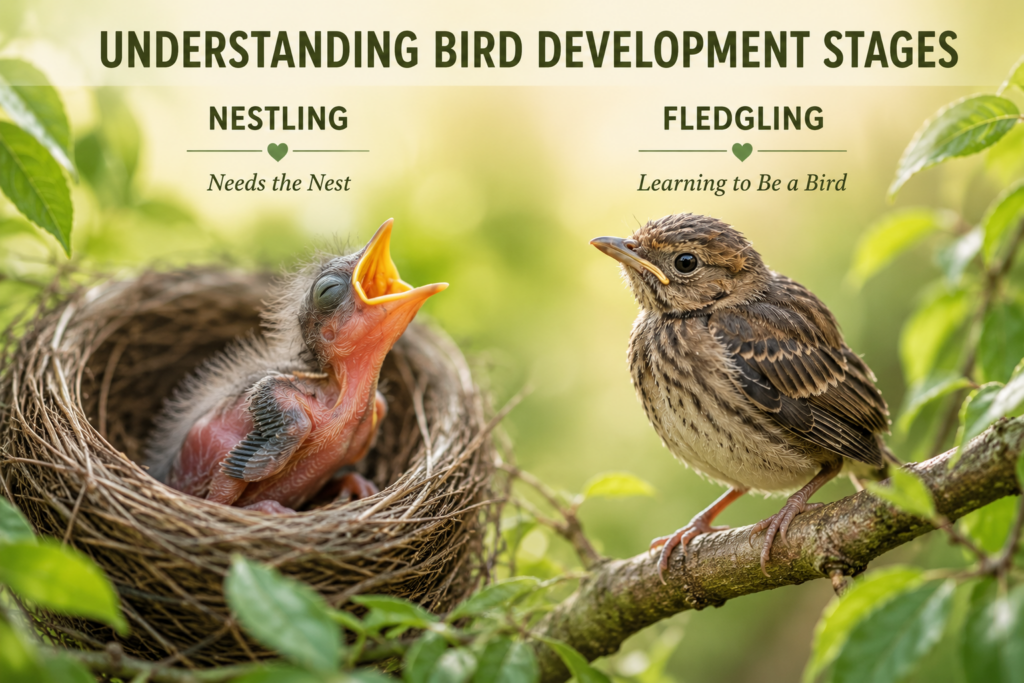
Nestling: Needs the Nest
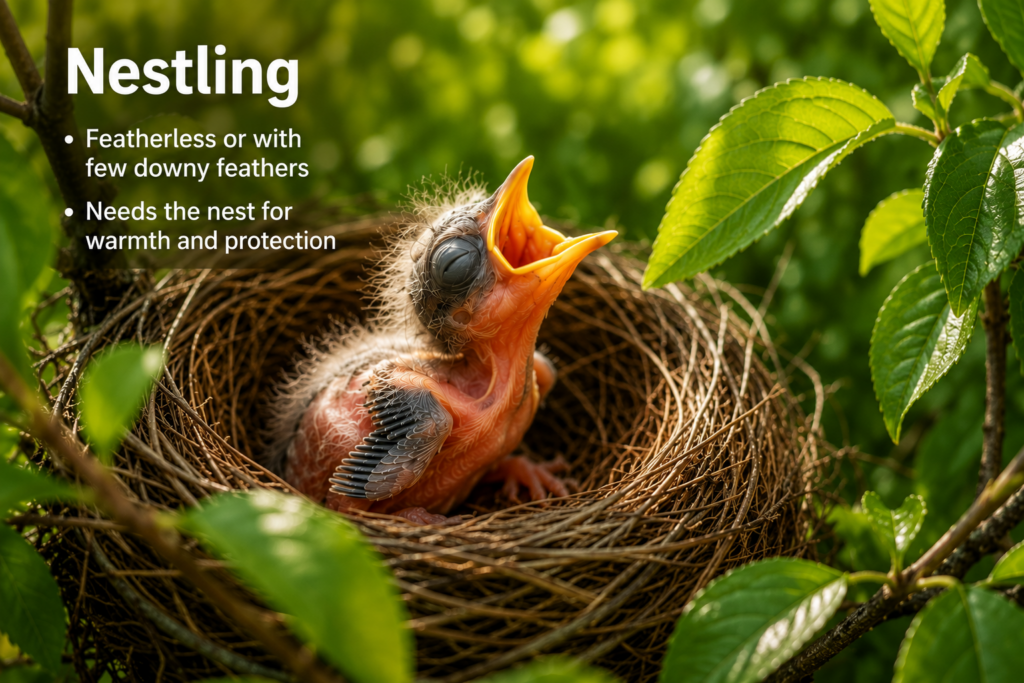
Nestlings are very young birds.
Signs include:
- Few feathers or mostly bare skin
- Cannot hop or walk well
- Cannot perch
- Eyes may be closed or partially open
- Relies completely on parents for warmth and food
If you find a nestling on the ground:
✔ Try to locate the nest.
✔ If possible, gently return the bird to the nest.
✔ Parents will not reject a baby because it has been touched by a human.
This is one of the most common wildlife myths.
Fledgling: Learning to Be a Bird
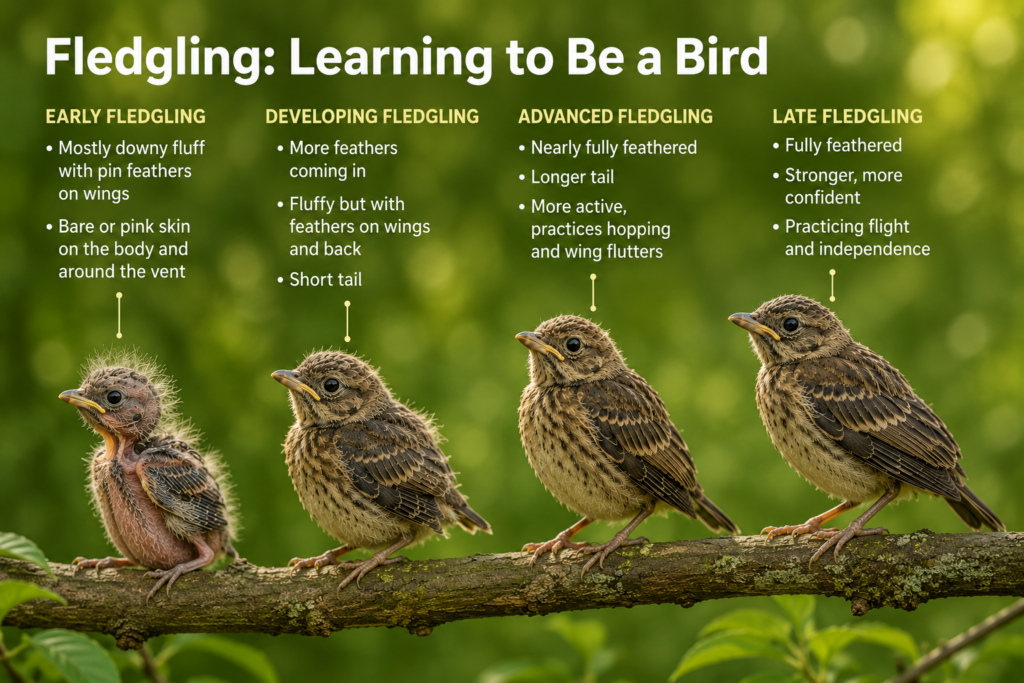
Fledglings are often mistaken for abandoned babies.
Signs include:
- Mostly feathered
- Short tail feathers
- Able to hop, flutter, or perch
- Bright and alert
- May sit on the ground or low branches
This stage can look alarming.
The bird may appear helpless, but it is actually learning essential survival skills.
Parents are usually nearby, feeding and monitoring their young throughout the day.
If you find a healthy fledgling:
✔ Leave it where it is.
✔ Keep pets indoors or supervised.
✔ Observe from a distance.
In most cases, the parents are still caring for it.
Common Situations and What to Do
Situation #1: Baby Bird Fell From the Nest
If the bird is a nestling:
- Return it to the nest if possible.
- If the nest was destroyed, create a temporary substitute using a small basket or container with drainage holes.
- Secure the substitute nest near the original location.
Parents will often continue caring for the bird.
Situation #2: Bird Is Wet After a Storm
Storms can temporarily separate parents from young birds.
If the bird:
- Is upright
- Alert
- Breathing normally
- Not visibly injured
Give the parents time to return once weather improves.
If the bird is cold, weak, or unresponsive:
- Place it in a warm, quiet box lined with paper towels.
- Keep it away from pets and children.
- Contact a wildlife rehabilitator when available.
Situation #3: Fledgling on the Ground
This is often normal.
Young birds frequently spend several days on the ground while learning to fly.
Do not assume the bird is abandoned.
Instead:
- Move pets away.
- Keep children from handling it.
- Watch from a distance.
Situation #4: Cat Caught a Bird
This is an emergency.
Even tiny puncture wounds can become fatal due to bacteria carried in a cat’s mouth.
The bird should be evaluated by a licensed wildlife rehabilitator as soon as possible.
Situation #5: Bird Hit a Window
Signs include:
- Dazed behavior
- Difficulty standing
- Closed eyes
- Weakness
Place the bird in a dark, quiet box and monitor for 1–2 hours.
If it does not recover quickly, seek professional wildlife assistance.
What NOT to Do
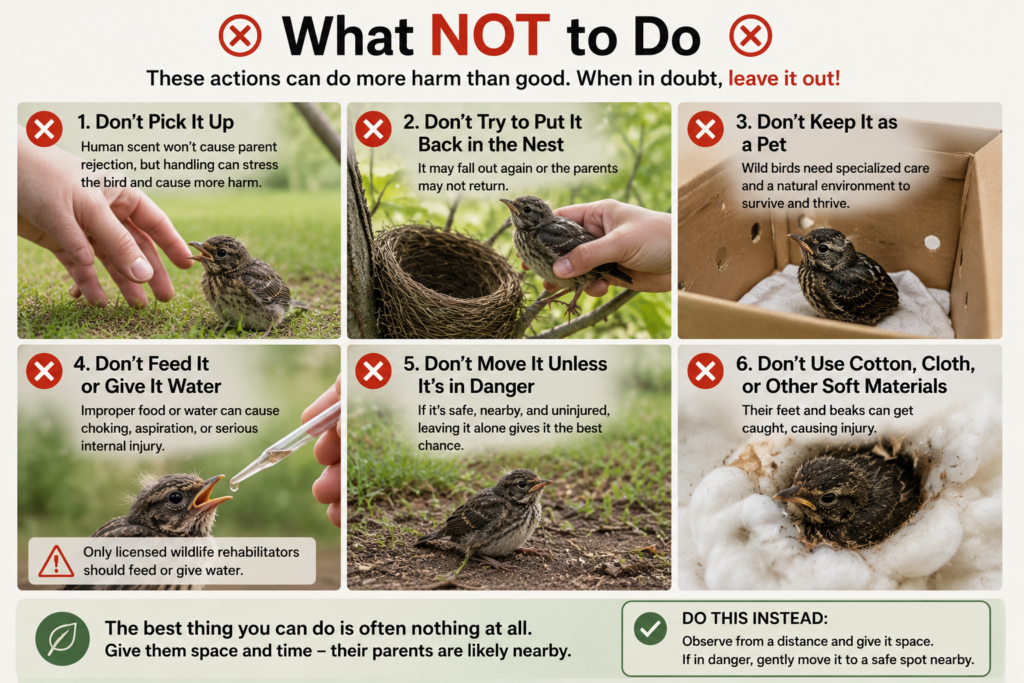
Do Not Give Water Directly Into Its Mouth
Baby birds can easily inhale water into their lungs.
This can cause aspiration and death.
Do Not Feed Bread
Bread provides little nutritional value and may create digestive problems.
Do Not Feed Milk
Birds are not mammals.
They cannot digest milk.
Do Not Force Feed
Improper feeding is one of the most common causes of accidental injury to rescued birds.
Do Not Assume Parents Have Abandoned It
Many bird species continue caring for young birds even when they are out of the nest.
Parents may stay hidden until people leave the area.
How to Tell If a Baby Bird Truly Needs Help
A bird may need assistance if:
- It has visible injuries
- It is bleeding
- It cannot stand
- It has a broken wing or leg
- It is cold and unresponsive
- It has been attacked by a cat
- Its parents have not returned after extended observation
- It is covered in flies or insects
When in doubt, observe first and intervene second.
The Best Thing Most People Can Do
The desire to help is admirable.
But nature often looks messier than we expect.
A young bird sitting alone on the ground is not always in danger.
Sometimes it is taking its very first steps toward independence.
The greatest gift we can offer wildlife is informed compassion—helping when necessary, but also knowing when to step back and allow nature to do what it has done for millions of years.
The next time you find a baby bird, remember:
Observe.
Protect.
Educate.
Then act only when truly needed.
Sometimes the best rescue is simply giving a young bird the chance to grow.