
Food Insecurity in America: Why Families Are Struggling—and How We Can Help
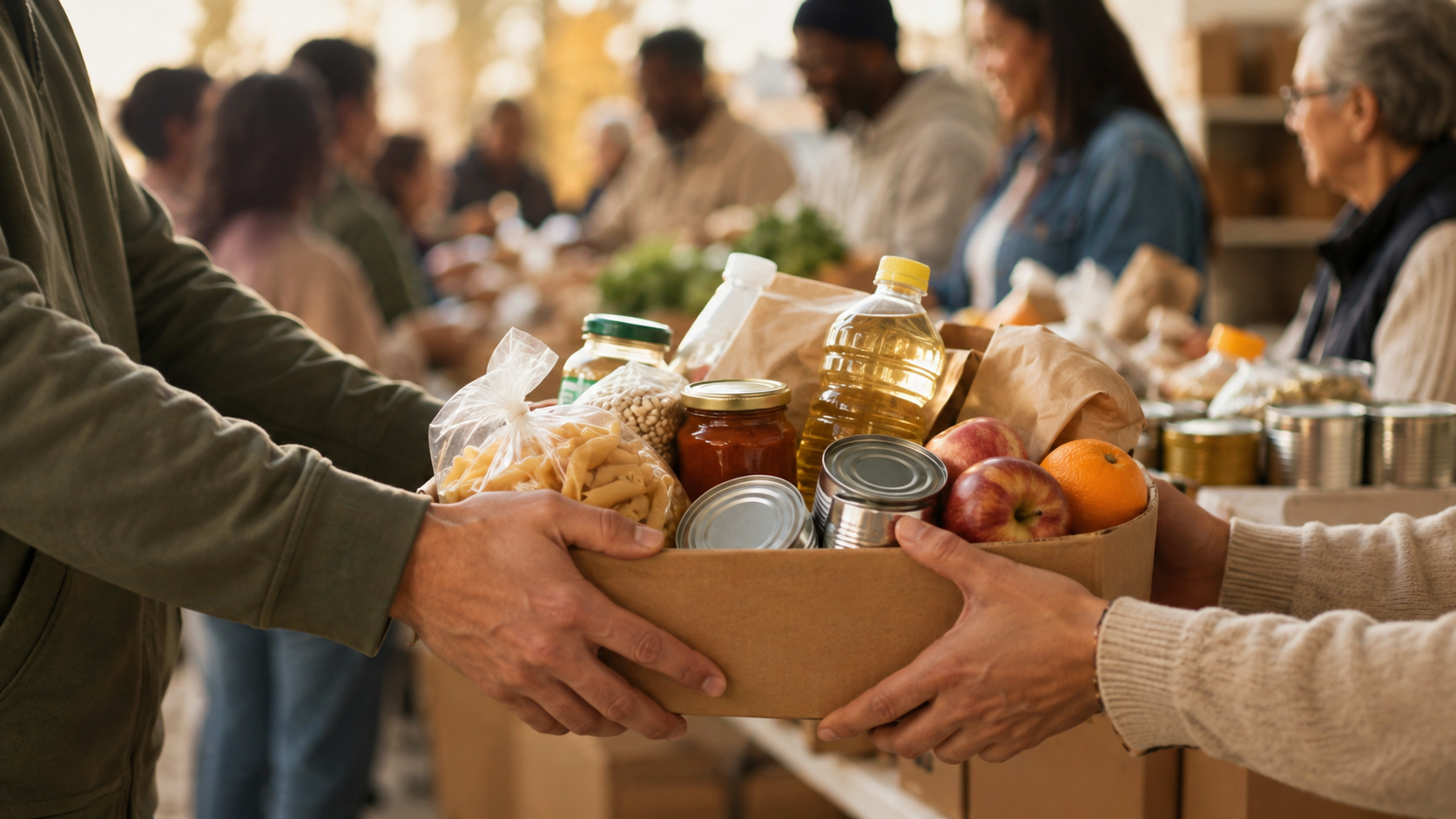
There is enough food in America.
And yet millions of Americans still aren’t sure whether there will be enough food in their kitchen tomorrow.
Food insecurity doesn’t always look like an empty refrigerator. It can look like a parent eating less so their children can have dinner. A senior stretching one meal into two. Someone standing in the grocery aisle putting items back as the total climbs. A family buying cheaper, less nutritious foods because fresh produce, meat and other staples have become too expensive.
It can be the person working beside you.
The family down the street.
The senior living alone.
The college student trying to make tuition and groceries work.
Or it may be you.
According to the USDA’s most recent national household data, 18.3 million U.S. households—13.7% of all households—experienced food insecurity at some point during 2024. More than 7 million households experienced the more severe category known as very low food security, where normal eating patterns were disrupted and people sometimes ate less because they couldn’t afford enough food.
More recent estimates released by Feeding America in July 2026 put the human scale at approximately 47.9 million people experiencing food insecurity, including about 14 million children.
This isn’t simply a hunger problem.
It is a problem of affordability, access, health, transportation, housing costs, income, unexpected emergencies and the increasingly difficult choices families make when there simply isn’t enough money for everything.
Understanding those realities is the first step toward changing them.
What Is Food Insecurity?
Food insecurity means that a household doesn’t consistently have reliable access to enough affordable, nutritious food.
It isn’t exactly the same thing as hunger.
Hunger is a physical feeling. Food insecurity is the condition that can cause it.
Someone experiencing food insecurity might still eat every day.
They may simply not know whether they can afford groceries next week.
They may regularly purchase whatever is cheapest instead of what is healthiest.
They may reduce portions.
Skip meals.
Depend on friends or relatives.
Visit food pantries.
Delay paying another bill so they can buy groceries.
Or adults may eat less so the children in the household have enough.
The USDA generally describes two levels of food insecurity.
Low food security occurs when the quality, variety or desirability of someone’s diet declines because resources are limited, although the amount of food they eat may not substantially decrease.
Very low food security is more serious. At this level, eating patterns become disrupted and the amount of food someone eats actually decreases because there isn’t enough money or other resources available.
And food insecurity doesn’t have to happen every day to be real.
A household might be financially stable for much of the year and suddenly struggle after a layoff, medical bill, car repair, rent increase or other unexpected expense.
What Food Insecurity Actually Looks Like
One reason food insecurity can remain invisible is that it rarely looks the way people expect.
A household can have food in the pantry and still be food insecure.
Someone can own a home and experience food insecurity.
Someone can have a job and experience it.
Someone can own a car, have a smartphone or wear nice clothing and still struggle to buy groceries.
Food insecurity can look like:
- worrying that groceries will run out before payday;
- repeatedly eating inexpensive foods because they’re all you can afford;
- skipping breakfast or lunch to save food;
- watering down milk or stretching ingredients farther than intended;
- adults eating smaller portions so children can eat normally;
- relying heavily on school meals;
- choosing between groceries and medication;
- choosing between groceries and utilities;
- delaying rent, mortgage or another bill to buy food;
- relying on credit cards to purchase groceries;
- avoiding fresh produce, meat or dairy because of cost;
- going to several stores searching for affordable food;
- depending on relatives or neighbors for meals;
- regularly using a food pantry;
- or simply having no idea how you’re going to afford groceries next week.
If any of these situations sound familiar, food assistance programs exist for exactly these kinds of circumstances.
You don’t have to wait until your refrigerator is completely empty to ask for help.
Why Are So Many Americans Struggling With Food?
Food insecurity usually isn’t caused by one thing.
It happens when the cost of basic needs becomes greater than the resources a household has available.
1. Food costs
Even relatively small increases in grocery prices become significant when repeated across dozens of items every week.
A household that once had enough room in its budget may suddenly find itself short.
2. Housing costs
Food often becomes one of the only flexible expenses in a household budget.
Rent is due.
The mortgage is due.
Utilities need to stay on.
The car payment has to be made.
Medication may be necessary.
That leaves groceries as one of the few expenses people feel they can reduce.
3. Low or unpredictable income
Food insecurity isn’t limited to unemployed households.
Hourly workers may experience fluctuating schedules, seasonal employment or unexpected reductions in hours.
Someone can be employed and still not earn enough to consistently cover housing, transportation, healthcare, utilities and food.
4. Medical expenses
An illness, injury or chronic condition can quickly change a household budget.
The problem can become even worse when someone needs nutritious foods because of a health condition but can no longer afford them.
5. Transportation
Food access isn’t simply about whether food exists.
People need a practical way to reach it.
A grocery store ten miles away isn’t particularly accessible to someone without reliable transportation.
Transportation barriers can be especially difficult for seniors, people with disabilities and residents of rural communities.
6. Unexpected emergencies
A broken furnace.
A $1,000 car repair.
Reduced work hours.
A divorce.
A death in the family.
A medical emergency.
A job loss.
Food insecurity can begin very quickly.
Many households aren’t chronically poor. They’re simply one major expense away from not having enough money left for food.
Food Insecurity Affects Every Community
Food insecurity is not confined to a particular region or type of community.
Feeding America’s 2026 Map the Meal Gap estimates food insecurity in every U.S. county and congressional district.
Rural communities face particularly serious challenges. More than eight out of ten counties with the highest estimated food-insecurity rates in the latest analysis were rural or located in the South.
But hunger isn’t exclusively rural.
It exists in suburbs.
Cities.
Small towns.
Affluent counties.
And communities where you might never expect it.
One of the most important lessons from the data is simple:
You probably know someone who has experienced food insecurity—even if you don’t know that they have.
Children and Food Insecurity
Children are particularly vulnerable.
USDA data show that 18.4% of U.S. households with children experienced food insecurity in 2024.
Parents frequently protect children from the worst effects by reducing their own food intake first.
That means a child may appear to be eating normally while a parent quietly skips meals.
School breakfast and lunch programs can therefore provide far more than convenience. For some children, they are an important part of the family’s food supply.
Summer can create another challenge when school meals disappear.
The federal SUN Bucks (Summer EBT) program provides eligible school-age children with grocery benefits during summer in participating states, Tribal nations and territories. USDA also operates SUN Meals and, in some rural areas, SUN Meals To-Go.
Families should check eligibility even if they haven’t previously used food assistance.
Seniors Are Struggling Too
Older adults are another population that can easily be overlooked.
Feeding America’s latest estimates indicate that more than 12 million seniors and older adults experienced food insecurity in 2024.
Some live on fixed incomes while food, housing, utilities and healthcare costs continue changing.
Others face transportation or mobility barriers that make accessing groceries difficult even when food is technically available nearby.
And seniors may be particularly reluctant to tell family members or friends they’re struggling.
Programs such as SNAP, local senior meal programs, community food pantries and home-delivered meal services can provide important assistance.
The Hidden Gap: People Who Make “Too Much” for Assistance
Perhaps one of the most important findings in Feeding America’s 2026 data is this:
Approximately 25 million people experiencing food insecurity had household incomes too high to qualify for federal nutrition assistance under relevant income thresholds used in the study.
This illustrates an enormous problem.
Someone can earn too much to qualify for certain assistance and still not earn enough to comfortably afford everything their household needs.
There is often a gap between:
“Not officially poor enough for assistance”
and
“Financially secure enough to afford necessities.”
Millions of households can fall somewhere in between.
This is one reason charitable food pantries, community programs, mutual-aid networks and nonprofit organizations remain important even when government nutrition programs exist.
If YOU Are Struggling to Afford Food, Start Here
First, recognize something important:
You do not need to reach a crisis point before seeking assistance.
Food assistance isn’t something you have to “save” for someone who needs it more.
If you’re skipping meals, reducing portions, worrying about running out of groceries or sacrificing other necessities to buy food, it is reasonable to investigate what help is available.
1. Check SNAP eligibility
The Supplemental Nutrition Assistance Program (SNAP) provides eligible households with benefits for purchasing groceries.
Eligibility rules depend on factors including household income, resources and household circumstances, and some rules have changed.
Don’t assume you don’t qualify because you were denied years ago or because someone else told you that you probably earn too much.
Check your current eligibility.
Applications are handled by individual states.
Official resource: USDA SNAP State Directory
https://www.fns.usda.gov/snap/state-directory
2. Check WIC if you have young children or are pregnant
WIC provides eligible pregnant and postpartum women, infants and children under age five with nutritious foods, nutrition support and referrals to other services.
Families receiving SNAP, Medicaid or TANF may already meet WIC’s income requirements.
Official eligibility information:
https://www.fns.usda.gov/wic/eligibility
3. Check summer food programs for children
Families with school-age children should check whether they qualify for SUN Bucks/Summer EBT and local summer meal programs.
Official information:
https://www.fns.usda.gov/summer/sunbucks
4. Find a local food pantry
Food pantries aren’t only for people who have absolutely nothing.
Many serve working families, seniors and people experiencing temporary financial emergencies.
Requirements differ by organization, so contact the pantry directly.
Some provide fresh produce, dairy, meat, household products and personal-care items in addition to shelf-stable food.
5. Look for community meals
Churches, nonprofits, senior centers, community centers, schools and other organizations frequently provide free meals.
Some have income requirements.
Others don’t.
6. Ask about senior food programs
Older adults may qualify for programs specifically designed for seniors, including congregate meal sites, home-delivered meals and other community nutrition services.
7. Tell someone you trust
Food insecurity thrives in silence.
People often don’t know someone needs help because the person experiencing the problem is trying very hard to hide it.
A friend might have an overflowing garden.
A relative may happily pick up groceries.
A neighbor may know about a local pantry.
Someone may know about a community program you didn’t realize existed.
Asking for help can feel uncomfortable.
Going hungry shouldn’t be the alternative.
What If You Need Food Right Now?
If you’re reading this because there isn’t enough food for today or the next few days, don’t spend hours trying to solve your entire financial situation first.
Solve today’s problem first.
Look for:
local food pantries
community meal programs
food banks
school food programs
senior meal programs
community centers
local mutual-aid groups
religious organizations offering food assistance
community refrigerators or free pantries
Then work on longer-term assistance once the immediate need is handled.
Food banks exist to distribute food.
Food pantries exist so people can use them.
Community programs exist because communities want people to eat.
Using them when you need them is exactly what they’re there for.
How to Make a Limited Grocery Budget Go Further
Food assistance can help, but households still need strategies for stretching whatever grocery money they have.
Start with foods that provide multiple servings and can work in several meals.
Depending on dietary needs and local prices, economical staples can include:
- rice;
- oats;
- potatoes;
- pasta;
- dried or canned beans;
- lentils;
- eggs;
- peanut butter;
- canned tuna or other fish;
- frozen vegetables;
- canned vegetables;
- bananas;
- carrots;
- cabbage;
- store-brand cereals;
- tortillas;
- bread;
- canned tomatoes;
- soups;
- yogurt;
- and seasonal produce.
Frozen fruits and vegetables can be especially useful because they’re nutritious, last much longer than fresh produce and reduce waste.
Before shopping, check what you already have.
Build meals around those ingredients first.
Then purchase the missing pieces.
A bag of potatoes isn’t just a side dish. It can become baked potatoes, breakfast potatoes, soup, mashed potatoes or part of a casserole.
Rice can accompany beans, vegetables, eggs, soup or inexpensive proteins.
The objective isn’t simply buying the cheapest individual products.
It’s buying foods that can work together to create the greatest number of satisfying meals.
If You Have Enough Food: Here’s How You Can Help
Food insecurity can feel like an enormous national problem.
But feeding people is also something communities can do extraordinarily well.
And you don’t need to solve hunger in America to make a meaningful difference.
You can help one household.
One child.
One senior.
One neighborhood.
One pantry.
That’s where change starts.
1. Donate money to a food bank or pantry
Financial donations can be extremely valuable because food banks often purchase food in bulk and work with suppliers and retailers.
Even small recurring donations can help organizations plan.
2. Donate the foods pantries actually need
Don’t simply clean unwanted items out of the back of your pantry.
Ask the organization what it needs.
Commonly useful items can include:
- peanut butter;
- canned proteins;
- beans;
- canned vegetables;
- canned fruit;
- cereal;
- oatmeal;
- pasta;
- rice;
- shelf-stable milk;
- cooking oil;
- baby food;
- and easy-to-prepare meals.
Needs vary considerably, so check the pantry’s current wish list first.
3. Remember personal-care products
SNAP generally cannot be used to purchase many nonfood household necessities.
That means families struggling with food may also struggle to afford:
toilet paper, soap, shampoo, toothpaste, menstrual products, diapers, laundry detergent and cleaning supplies.
If your local pantry accepts these items, they can be incredibly useful donations.
4. Donate food people actually want to eat
Dignity matters.
People experiencing food insecurity still have preferences, cultures, allergies, dietary restrictions and health conditions.
Someone receiving assistance shouldn’t be expected to simply be grateful for whatever nobody else wanted.
Good charitable food assistance gives people choices whenever possible.
5. Donate fresh garden produce
If your garden produces more tomatoes, zucchini, cucumbers, beans or other produce than you can use, check whether a local pantry accepts homegrown produce.
Some do.
A productive backyard garden can become a tiny local food source.
6. Volunteer
Food banks and pantries often need people to:
sort donations,
pack boxes,
stock shelves,
assist clients,
deliver groceries,
pick up donations,
help at mobile food distributions,
or perform administrative work.
Your time can be just as valuable as your money.
7. Help seniors
Ask an older neighbor whether they need anything when you’re heading to the grocery store.
You don’t have to ask:
“Are you food insecure?”
Simply saying,
“I’m going to the store tomorrow. Is there anything I can pick up for you?”
can create an opening without embarrassment.
8. Start a neighborhood food pantry
Little free pantries and community food cabinets can provide anonymous, immediate assistance.
A simple principle works well:
Take what you need. Leave what you can.
If you create one, maintain it responsibly, check food dates and conditions, follow local rules and regularly restock high-demand essentials.
9. Reduce food waste
Perfectly edible food shouldn’t be thrown away while people nearby are hungry.
Restaurants, grocery stores, farms, schools, event venues and households can all explore ways to redirect safe surplus food.
Food rescue organizations can help connect excess food with organizations serving people who need it.
10. Organize a targeted food drive
Instead of saying:
“Bring canned goods.”
Ask a local pantry for its ten most-needed items.
Then build the drive around those specific needs.
A targeted donation drive can be significantly more useful than collecting random food.
11. Help someone navigate assistance
Applications can be confusing.
Technology can be intimidating.
Transportation can be difficult.
Forms can feel overwhelming.
Helping someone locate programs, gather paperwork or complete an application can be an enormous act of service.
12. Support school food programs
Schools are one of America’s most important hunger intervention points.
Support breakfast programs, lunch programs, backpack food programs and summer meal programs.
Ask your local school district what students currently need.
13. Create an emergency grocery fund
A neighborhood group, workplace, community organization or nonprofit could maintain a small fund specifically for emergency groceries.
Sometimes a household doesn’t need months of assistance.
They need $75 worth of groceries to get through until payday.
14. Pay attention
Sometimes helping begins simply by noticing.
Is an elderly neighbor suddenly losing weight?
Is a coworker regularly skipping lunch?
Is a friend joking about living on ramen until payday?
Is a child regularly saying there isn’t food at home?
Don’t assume.
But don’t ignore it either.
A quiet offer of help can matter.
15. Advocate for better access to food
Charity is important.
But food insecurity cannot be solved entirely through donated cans.
Communities can also address:
affordable housing,
transportation,
access to grocery stores,
living wages,
school meals,
senior nutrition,
food waste,
community gardens,
nutrition assistance,
and emergency support systems.
We need both.
Help for the person who is hungry today—and solutions that make it less likely they’ll be hungry tomorrow.
How to Help Someone Without Embarrassing Them
This deserves more attention than it usually receives.
Food insecurity can carry tremendous shame.
Instead of:
“Do you need food?”
consider:
“I made way too much soup. Can I bring you some?”
“I’m stopping at the grocery store. What can I grab for you?”
“My garden went crazy this year. Would you use some tomatoes and vegetables?”
“I have an extra grocery gift card. I’d really like you to have it.”
Or simply:
“Things are expensive right now. If groceries ever get tight, please tell me. I mean it.”
Help should preserve dignity.
Whenever possible, give people choice rather than deciding what they should eat.
A grocery gift card can sometimes be more useful than a bag filled with foods they can’t use.
What Should You NOT Donate to a Food Pantry?
Unless the organization specifically says otherwise, avoid donating:
- opened food;
- damaged packaging;
- badly dented or leaking cans;
- expired items the organization cannot distribute;
- homemade canned foods;
- foods requiring unusual ingredients to prepare;
- enormous restaurant-size containers that aren’t practical for households;
- or food you wouldn’t feel comfortable serving your own family.
A food pantry isn’t a disposal service for unwanted food.
The question shouldn’t be:
“What can I get rid of?”
It should be:
“What would someone be grateful to find when they’re trying to feed their family?”
That small shift in thinking matters.
Food Insecurity Is About More Than Food
At first glance, the solution seems obvious:
Someone is hungry.
Give them food.
And yes—we should.
But long-term food security requires us to look deeper.
Why couldn’t they afford food?
Was rent too high?
Did their work hours disappear?
Did their car break down?
Did medication consume the grocery budget?
Can they reach a supermarket?
Are they caring for children?
Are they elderly?
Did an emergency wipe out their savings?
Are benefits available but difficult to access?
Does their community even have affordable grocery options?
The most effective response to food insecurity combines immediate compassion with long-term problem solving.
A Community Where Nobody Has to Hide Hunger
Imagine if every neighborhood had a place where someone could get emergency food without shame.
Imagine if surplus garden produce automatically found its way to families who could use it.
Imagine if restaurants and stores redirected more safe excess food instead of throwing it away.
Imagine if seniors didn’t have to choose between medication and groceries.
Imagine if children never worried about whether dinner would be waiting at home.
Imagine if asking for help was treated as normally as borrowing a ladder from your neighbor.
Food insecurity is enormous when we look at 47.9 million people at once.
But communities aren’t built 47.9 million people at a time.
They’re built person by person.
Neighbor by neighbor.
Meal by meal.
If you are struggling, use the help that exists.
If you have enough, share what you can.
If you have time, volunteer.
If you have a voice, advocate.
If you grow food, share the harvest.
If you know someone struggling, reach out without judgment.
And if all you can do today is put two extra cans into a community pantry, that’s two cans that weren’t there yesterday.
Ending hunger requires enormous systems and policies.
But it also requires something much simpler:
People deciding that their neighbors should not go hungry.
And every one of us can be part of that.
Food Assistance Resources
If you or someone you know is struggling with food, these are good places to begin:
SNAP — Supplemental Nutrition Assistance Program
Apply through your state’s SNAP agency.
https://www.fns.usda.gov/snap/state-directory
WIC — Women, Infants and Children
Nutrition assistance for eligible pregnant and postpartum women, infants and children under five.
https://www.fns.usda.gov/wic/eligibility
SUN Bucks / Summer EBT
Summer grocery benefits for eligible school-age children in participating locations.
https://www.fns.usda.gov/summer/sunbucks
Feeding America — Find Your Local Food Bank
https://www.feedingamerica.org/find-your-local-foodbank
Feeding America — Map the Meal Gap
Explore food insecurity in your own community.
https://www.feedingamerica.org/research/map-the-meal-gap
Local food pantries, schools, senior centers, community organizations and local government agencies may have additional resources.
Program rules and availability can change, so always check current eligibility and requirements directly with the organization or government agency.
Sources
U.S. Department of Agriculture, Economic Research Service — Household Food Security in the United States in 2024 and Food Security in the U.S., updated 2026.
Feeding America — Map the Meal Gap 2026, released July 28, 2026.
U.S. Department of Agriculture, Food and Nutrition Service — SNAP, WIC and SUN Bucks/Summer EBT program information.